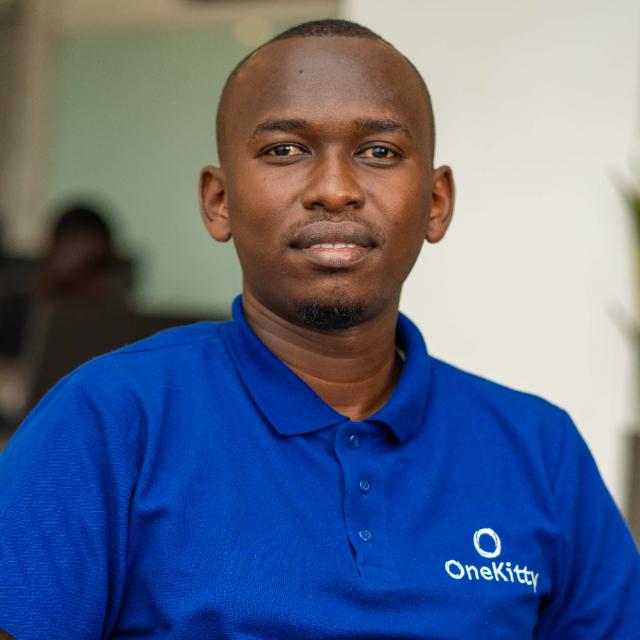
Every few months, another headline tells you Africa's fintech story: banking the unbanked, leapfrogging legacy infrastructure, bringing millions into the formal financial system. It's a good story. It's also not the one that explains why a six-person software company in Nairobi is quietly running one of the most-used contribution platforms in the country.
Liana Technologies didn't set out to bank anyone. Their product, OneKitty, digitizes something that was never unbanked in the first place: the chama.
The Problem Was Never Access
Chamas — informal savings and contribution groups — move real money in Kenya. Weddings, hospital bills, funerals, school fees, flood relief. None of that required a bank to invent. It required a WhatsApp group, a spreadsheet somebody's cousin maintained, and a treasurer everyone hoped was honest.
That's the part worth sitting with. The money was already moving. The behavior was already there. What was missing wasn't a rail — it was a receipt.
Ask anyone who's run a chama what actually breaks trust in the group, and it's rarely the amount. It's the ambiguity. Who paid. Who didn't. Whether the total everyone's quoting matches the total that's actually sitting somewhere. Traditional crowdfunding platforms like GoFundMe or even Kenya's own M-Changa were built to move money from strangers to a cause. Chamas are the opposite problem: money moving between people who already know each other, where the entire value of the platform is whether every member can see the same numbers at the same time.
OneKitty's actual innovation wasn't a payment rail. It was pushing real-time contribution updates straight into the WhatsApp and Telegram groups where the trust problem was already happening. No new app to check. No dashboard nobody opens. The transparency shows up exactly where the anxiety lives.
A Small Team, Ten Thousand Kitties
Liana Technologies isn't a funded startup in the Silicon Valley sense of the word. It's a small software house that also builds a point-of-sale product called HadPOS. OneKitty was bootstrapped, not venture-backed, and as of recent data still hasn't taken a funding round.
And yet the platform has reportedly facilitated over 10,000 fundraising campaigns touching more than 200,000 people — flood relief for displaced families in Mathare, medical fundraisers, school fees, community projects run through mosques, churches, and saccos.
That's not a story about disruption. It's a story about a small team that found a high-frequency, high-trust behavior already happening at scale and removed the one thing that made it stressful: not knowing if the numbers were real.
Why "Trust Infrastructure" Is the More Interesting Category
Most African fintech pitches sell inclusion — get people who don't have bank accounts into the formal financial system. It's a real problem, and a lot of genuinely good companies work on it.
But OneKitty points at a different, less-discussed gap: informal financial systems that are already massive, already trusted enough to move real money, and completely unaccountable by design. Nobody needed OneKitty to convince them chamas work. Chamas have worked for generations. What nobody had built was the layer that makes an informal system behave like an accountable one — without asking anyone to abandon the WhatsApp group they already live in.
That's a fundamentally different design brief than "build an app and get people to download it." It's: find the system people already trust enough to use, and make it trustworthy enough to stop causing arguments.
The Actual Lesson
If there's a broader point for founders building anywhere with a strong culture of informal finance — Kenya's chamas, Nigeria's ajo and esusu, Ghana's susu, Ethiopia's iqub — it's this: the opportunity usually isn't convincing people to adopt new financial behavior. It's building the accountability layer for behavior that already exists, at a scale most fintech founders underestimate because it doesn't show up in the numbers banks report.
You don't need a bank license to solve that. You need to understand exactly where trust breaks down in a system people already use — and show up there, not somewhere more convenient for your product roadmap.
That's a much smaller, much less glamorous pitch than "banking the unbanked." It also might be the more durable business.
Liana Technologies is now extending that same trust-first thinking into a dedicated welfare product — more on that soon.